The 'Let Them' Theory
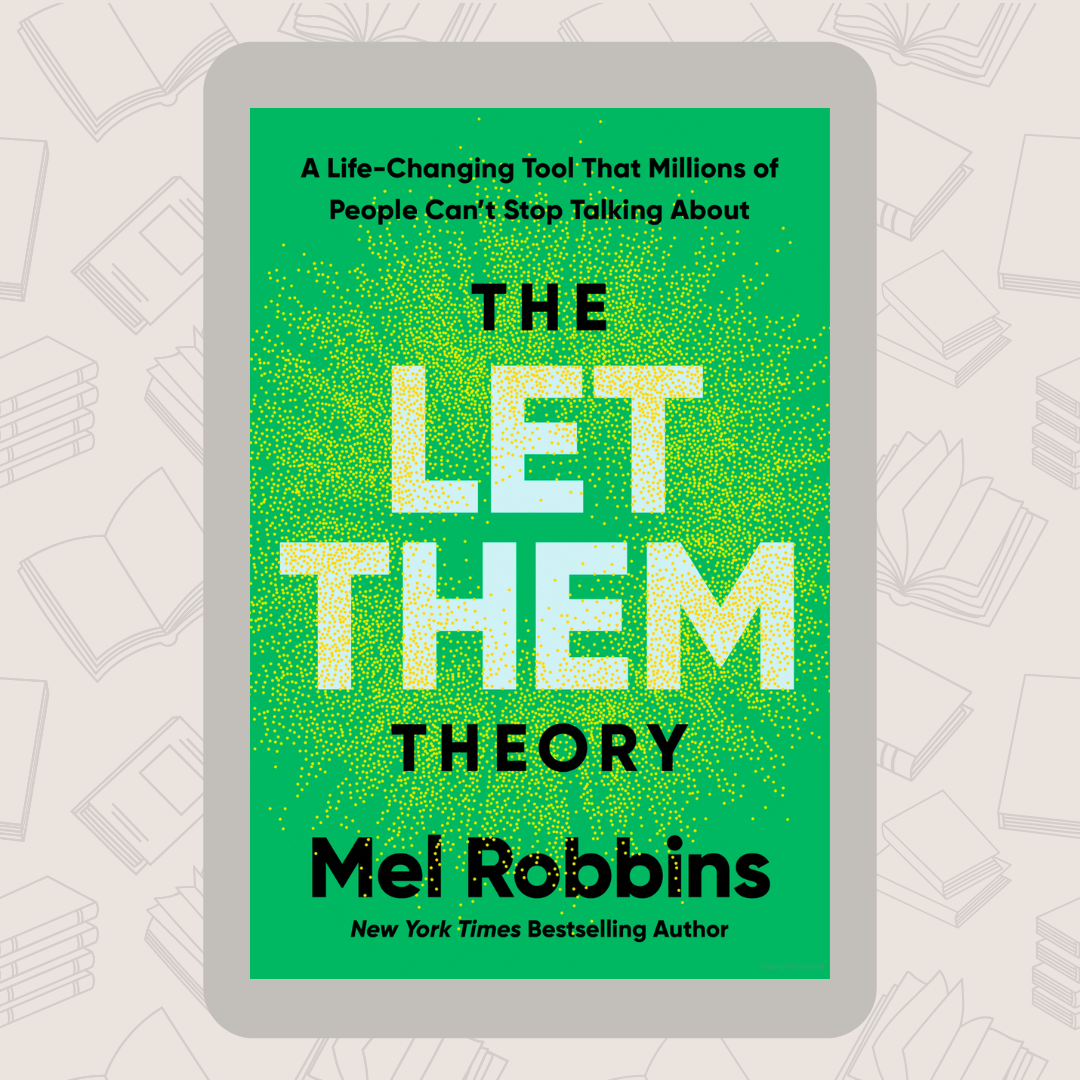
If you know me, you know I am an enthusiastic reader - usually of fiction, because I enjoy the escapism and the ability to vanish off to another world (without the travel stress or risk of actual peril or uncomfortable beds), but I do like a good therapy, or therapy-adjacent read. I have heard a lot about the 'Let Them" Theory (Mel Robbins) of late, so I downloaded the audiobook and got going with it. For people who have trained as counsellors, or whose spiritual practices are grounded in Buddhism for example, the concepts within are likely not unfamiliar ones, rooted as they are in radical acceptance, and stoicism. I think it's well worth a read, or a listen - for those completely new to the concepts I felt it was a well structured and simple approach, and importantly the audiobook felt positive and encouraging. I always encourage caution with audiobooks as I have occasionally been caught off-guard by a narrator I didn't quite get on with, and found that the written text sat more easily with me. Mel Robbins has a very no-nonsense approach and delivery which I suppose might not sit comfortably with everyone but I felt the good intention and good humour and I enjoyed the listen. It was delivered kindly, which I think is very important in a book about supporting you to live positively. It didn't feel like a sermon or a set of mandatory instructions, although there are most definitely instructions in the book, including some strategies that I'm going to go back and revisit as I think they might be very useful for situations where a bit of a plan might be supportive.
So, what is the Let Them Theory, exactly? Well, in a nutshell it is an exploration of agency, and allowing other people to live their lives and make their choices, while you go ahead and live your life and make your choices, looking at how the desire to control or influence other peoples' behaviour or choices impacts us as individuals, as well as having the potential to damage relationships, limit opportunities, cause conflict and distress... It is a great starting point for conversations, and even as someone who has done a lot of reading and thinking about these concepts alone, and talking about them with others, it was still good I felt to hear everything laid out so simply and in such a non-confrontative way. I appreciated the lack of a sense of power struggle, which of course is at the heart of the concept, but unfortunately when soundbites of this kind of approach are sometimes floating around online, they come across as aggressive rather than supportive and respectful of others and oneself.
There was one section where I had to sit back and have a think, and that was in the chapters about what to do if you want someone that you care about to change (and they don't want to), where she talks about using the strategies of motivational interviewing with a person who is resistant to change. I feel a cautionary note might be necessary, as there is one section in particular where she encourages asking 'why' or 'how does that make you feel' juuuuuust a few too many times for my comfort (but - please note, that's my comfort and not yours!). I just imagined myself using that on a variety of my nearest and dearest and what the responses might be...! Anyway - as you and I know, it's all subjective.
On the whole I recommend this one. There's lots of food for thought, and if you're harbouring a knee-jerk 'it's a gimmick' response, I think it's still worth having a look and a read through. Not every tool is going to be weighted and balanced just right for you, but often it's a good starting point, and I felt this was a positive and helpfully focused read. Would I quote it chapter and verse? No, but I don't think that's the point - would I go back to the concepts I identified with and found really useful? Most definitely!